
Contents
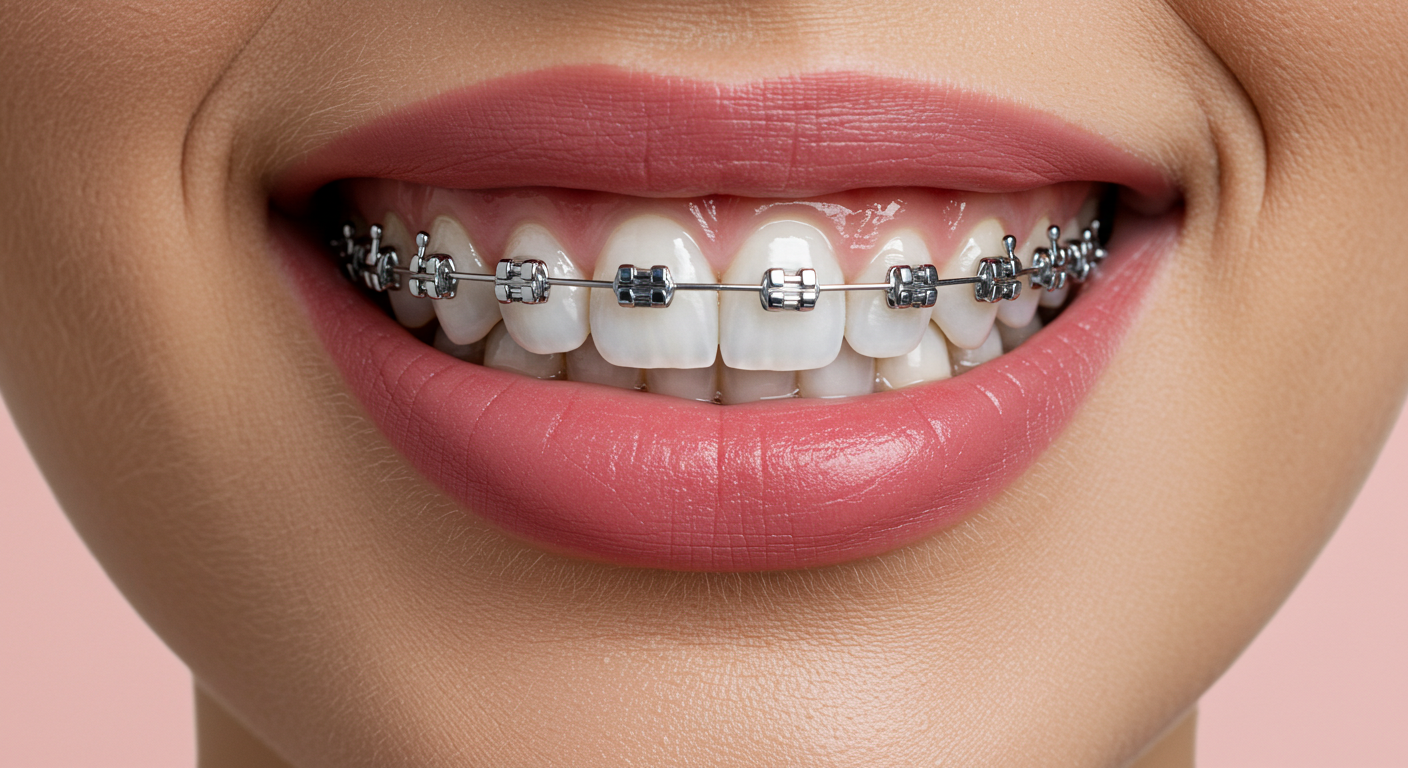
Metal vs. Ceramic Braces in 2026: Cost, Comfort, and Results Compared
Choosing between metal and ceramic braces is one of the most common decisions orthodontic patients face in 2026. While both types use the same fundamental mechanics to straighten teeth -- brackets bonded to tooth surfaces connected by an archwire -- they differ significantly in aesthetics, durability, cost, and suitability for different clinical situations. This comprehensive guide examines every factor you need to consider before making your choice.
Understanding Modern Orthodontic Braces
Orthodontic braces work by applying continuous, controlled force to move teeth gradually into their ideal positions. The system consists of three primary components: brackets (small attachments bonded to each tooth), an archwire (a thin metal wire threaded through the brackets that provides the force), and ligatures or elastic ties (small bands that hold the wire in place within each bracket). Treatment typically takes 12 to 36 months depending on the complexity of the case.
Modern braces have evolved substantially from the bulky, uncomfortable appliances of decades past. Today's brackets are significantly smaller, more precisely engineered, and designed with patient comfort in mind. Self-ligating bracket systems from manufacturers like Damon and In-Ovation have eliminated the need for elastic ties altogether, using a built-in clip mechanism that reduces friction and can shorten treatment time by several months in some cases.
Did You Know: According to the American Association of Orthodontists, approximately 4 million Americans are wearing braces at any given time, and about 25% of orthodontic patients are now adults. The growing adult patient population has driven much of the demand for more aesthetically pleasing options like ceramic braces and clear aligners.
Metal Braces: The Proven Workhorse
Traditional metal braces use brackets made from medical-grade stainless steel or, in some cases, titanium for patients with nickel allergies. They remain the most widely used orthodontic appliance worldwide and are considered the gold standard for complex cases requiring significant tooth movement, jaw correction, or precise rotational control.
Advantages of Metal Braces
- Maximum Strength: Stainless steel brackets are virtually indestructible under normal conditions, with bracket failure rates below 2%.
- Fastest Treatment: Metal brackets create less friction with the archwire, allowing teeth to move more efficiently. Complex cases may be completed 2 to 4 months faster with metal braces.
- Most Affordable: Metal braces are the least expensive fixed orthodontic option, typically $1,000 to $2,000 less than ceramic braces for the same treatment.
- Versatility: Suitable for all types of malocclusion, including severe crowding, significant bite discrepancies, and cases requiring surgical orthodontics.
- Customization for Younger Patients: Available with colored elastic ties, allowing teens and children to personalize their braces with school colors, holiday themes, or favorite color combinations.
Drawbacks of Metal Braces
- Highly visible, which is a concern for many adult patients and professionals.
- Can cause more initial irritation to the inner lips and cheeks due to the metal surface.
- Some patients report self-consciousness about their appearance during treatment.
- Metal brackets can interfere with certain imaging procedures (though this is rarely a clinical concern).
"For complex orthodontic cases -- severe crowding, significant overbite or underbite, impacted teeth -- metal braces remain the most predictable and efficient option. The advances in bracket design and archwire technology mean today's metal braces are more comfortable and effective than ever." -- Dr. Brent Larson, Professor of Orthodontics, University of Minnesota
Ceramic Braces: The Discreet Alternative
Ceramic braces use brackets made from polycrystalline alumina or monocrystalline sapphire -- materials that are either translucent or tooth-colored, making them far less noticeable than their metal counterparts. They operate on the same mechanical principles as metal braces and can treat the same range of orthodontic issues, though with some important differences in performance and care requirements.
Advantages of Ceramic Braces
- Superior Aesthetics: Ceramic brackets blend with the natural tooth color, making them 60% to 80% less noticeable than metal brackets at conversational distance.
- Professional Appearance: Ideal for adults in professional settings, public-facing roles, or anyone concerned about the visual impact of braces.
- Same Mechanism of Action: Ceramic braces use the same archwire and bracket system as metal braces, delivering comparable clinical results.
- Improved Comfort: Ceramic brackets have smoother, more rounded edges compared to metal brackets, which can reduce irritation to the lips and cheeks.
- Stain-Resistant Options: Newer sapphire brackets (like Inspire ICE and Radiance Plus) are made from single-crystal sapphire that resists staining throughout treatment.
Drawbacks of Ceramic Braces
- Higher Cost: Ceramic braces typically cost $1,000 to $2,000 more than metal braces for the same treatment plan.
- More Fragile: Ceramic brackets are more brittle than steel and can chip or crack under heavy bite forces, with bracket failure rates of 5% to 8%.
- Potential Staining: While the brackets themselves are stain-resistant (especially sapphire types), the clear elastic ligatures used with them can stain from coffee, tea, wine, curry, and tomato-based sauces.
- Slightly Longer Treatment: Higher friction between ceramic brackets and the archwire can extend treatment by 1 to 3 months in some cases.
- Enamel Considerations: Ceramic brackets bond more aggressively to enamel, which means removal (debonding) requires more care to avoid enamel damage.
Important Note: Some orthodontists recommend a hybrid approach -- ceramic brackets on the upper front teeth (the most visible area) and metal brackets on the lower teeth and back molars. This combination offers the aesthetic benefit of ceramic braces where they matter most while maintaining the durability and efficiency of metal brackets in high-force areas.
Complete Comparison: Metal vs Ceramic Braces
| Factor | Metal Braces | Ceramic Braces |
|---|---|---|
| Visibility | Highly visible (silver) | Discreet (tooth-colored or clear) |
| Cost (Total Treatment) | $3,000 - $7,500 | $4,000 - $9,500 |
| Durability | Extremely strong, rarely breaks | More fragile, can chip under force |
| Treatment Speed | 12 - 30 months (fastest option) | 14 - 33 months (slightly slower) |
| Staining Risk | None (metal does not stain) | Elastic ties can stain; sapphire brackets resist staining |
| Comfort | Good (smaller brackets available) | Slightly better (smoother edges) |
| Case Complexity | All cases including severe | All cases; best for mild to moderate |
| Ideal Patient | Children, teens, budget-conscious, complex cases | Adults, professionals, aesthetics-focused patients |
Cost Breakdown: What You Will Actually Pay
Understanding the full financial picture is essential when choosing between metal and ceramic braces. The total cost of orthodontic treatment includes more than just the braces themselves.
| Cost Component | Metal Braces | Ceramic Braces |
|---|---|---|
| Initial Consultation | $0 - $250 | $0 - $250 |
| Diagnostic Records (X-rays, models) | $200 - $500 | $200 - $500 |
| Braces and Placement | $2,000 - $4,500 | $3,000 - $6,500 |
| Monthly Adjustments | Usually included | Usually included |
| Retainers (Post-Treatment) | $250 - $600 | $250 - $600 |
| Emergency Repairs | Rare ($50 - $200) | More common ($50 - $300) |
| Typical Total | $3,000 - $7,500 | $4,000 - $9,500 |
Most dental insurance plans that cover orthodontics provide a lifetime benefit of $1,500 to $3,000, which applies equally to metal or ceramic braces. Many orthodontists also offer in-house payment plans with no interest, allowing you to spread the cost over the duration of treatment. HSAs and FSAs can also be used to pay for orthodontic treatment with pre-tax dollars.
Beyond Metal and Ceramic: Other Orthodontic Options
While metal and ceramic braces remain the most popular fixed orthodontic options, the market has expanded significantly. Understanding the alternatives helps put the metal-vs-ceramic decision in context.
Clear Aligners (Invisalign, ClearCorrect, SureSmile)
Clear aligners use a series of custom-made, removable plastic trays to gradually shift teeth into position. They are virtually invisible and can be removed for eating and cleaning. However, they require excellent patient compliance (20 to 22 hours of daily wear), may not be suitable for complex cases, and can cost $4,000 to $8,000 -- comparable to or higher than ceramic braces.
Lingual Braces
Lingual braces are metal brackets placed on the inside (tongue side) of the teeth, making them completely invisible from the outside. They are the most expensive option at $8,000 to $13,000 and require specialized training, so fewer orthodontists offer them. They can also cause more speech difficulties and tongue irritation than labial (front-facing) braces.
Self-Ligating Brackets
Available in both metal (Damon Q) and ceramic (Damon Clear) versions, self-ligating brackets use a sliding door mechanism instead of elastic ties. This reduces friction, can decrease appointment frequency, and may shorten treatment time by several months. The added cost is typically $500 to $1,500 above standard brackets.
Consultation Tip: Most orthodontists offer free or low-cost initial consultations. Take advantage of this by visiting 2 to 3 orthodontists to compare treatment plans, pricing, and payment options. A good orthodontist will present multiple treatment options and help you understand the trade-offs of each approach for your specific case.
Which Braces Are Right for You?
The decision between metal and ceramic braces should be based on a careful evaluation of your individual priorities, clinical needs, and budget. Here is a quick framework to guide your thinking:
Choose metal braces if: you are a child or teen who wants colored bands, your case is complex (severe crowding, significant bite correction needed), you prioritize the fastest possible treatment time, you play contact sports, or you want the most affordable option.
Choose ceramic braces if: aesthetics are a top priority during treatment, you are an adult in a professional or public-facing role, your case is mild to moderate in complexity, you are disciplined about avoiding staining foods and drinks, and you are willing to invest $1,000 to $2,000 more for a discreet appearance.
"The best orthodontic appliance is the one that achieves excellent results while meeting the patient's lifestyle needs. For an adult professional, the confidence boost of nearly invisible ceramic braces can be just as important to their well-being as the clinical outcome." -- Dr. Ravindra Nanda, Former Head of Orthodontics, University of Connecticut
Living with Braces: Care and Maintenance Tips
Regardless of which type you choose, proper care is essential for a successful outcome and healthy teeth throughout treatment.
- Brushing: Brush after every meal using a soft-bristled brush at a 45-degree angle to the brackets. Electric toothbrushes with orthodontic heads are highly recommended.
- Flossing: Use a floss threader, orthodontic flosser, or water flosser daily to clean between teeth and under the archwire.
- Diet: Avoid hard foods (nuts, hard candy, ice), sticky foods (caramel, taffy, gum), and biting directly into hard items like apples or corn on the cob. Cut foods into small pieces instead.
- For Ceramic Braces: Minimize consumption of dark-colored beverages (coffee, red wine, dark tea) and foods that stain (curry, balsamic vinegar, tomato sauce) to keep elastic ties clear.
- Mouthguard: If you play sports, use an orthodontic mouthguard to protect your brackets and lips from impact injuries.
Retention Is Critical: After your braces are removed, you must wear a retainer as directed by your orthodontist -- typically full-time for the first 3 to 6 months, then nightly indefinitely. Without consistent retainer use, teeth will gradually shift back toward their original positions. Relapse is the most common reason patients need retreatment.
Sources
- American Association of Orthodontists. "Economics of Orthodontics Survey 2025." AAO, 2025.
- Journal of Orthodontics. "Bracket failure rates: A comparison of metal and ceramic systems." J Orthod, Vol. 53, 2025.
- American Journal of Orthodontics and Dentofacial Orthopedics. "Friction characteristics of metal and ceramic brackets: A systematic review." AJODO, Vol. 169, 2026.
- Angle Orthodontist. "Treatment efficiency of self-ligating versus conventional bracket systems." Angle Orthod, Vol. 96, 2026.
- Journal of Clinical Orthodontics. "Patient satisfaction and quality of life during orthodontic treatment." JCO, Vol. 60, 2026.
- American Dental Association. "Orthodontic Coverage in Dental Benefits Plans." ADA Health Policy Institute, 2025.
FAQ: Metal vs Ceramic Braces
The ceramic brackets themselves -- especially sapphire varieties like Inspire ICE -- are highly stain-resistant. However, the clear elastic ligatures (ties) that hold the archwire to the brackets can stain from coffee, tea, red wine, curry, and tomato-based foods. These ties are replaced at each adjustment appointment (every 4 to 8 weeks), so any staining is temporary. You can also request self-ligating ceramic brackets, which eliminate elastic ties entirely.
The tooth soreness from orthodontic movement is the same regardless of bracket type -- it is caused by the archwire forces, not the brackets. However, ceramic brackets are often reported as slightly more comfortable against the lips and cheeks because they have smoother, more rounded edges. Both types may cause some lip and cheek irritation initially, which typically resolves within the first 1 to 2 weeks as the soft tissues adapt. Orthodontic wax can be applied to any bracket causing irritation.
While it is technically possible, it is not commonly done because it involves removing all existing brackets, cleaning the adhesive residue, and bonding new brackets -- essentially adding an additional appointment and cost. It is far better to make the right choice from the start. If you are unsure, discuss a hybrid approach with your orthodontist: ceramic brackets on the upper front teeth and metal on everything else.
Most dental insurance plans that include orthodontic coverage will cover ceramic braces at the same level as metal braces -- typically a lifetime benefit of $1,500 to $3,000. You will simply pay the difference in cost out of pocket. However, some plans may limit coverage to the cost of the least expensive option (metal braces) and require you to pay the full upgrade cost for ceramic. Check your specific plan details before starting treatment.
Clear aligners are more discreet than even ceramic braces and can be removed for eating and cleaning. However, they require strict compliance (20 to 22 hours daily wear), may not be suitable for complex cases, and their success depends heavily on patient discipline. Ceramic braces work 24/7 regardless of compliance and can handle more complex tooth movements. If aesthetics are your primary concern and your case is mild to moderate, clear aligners may be worth considering. For complex cases or patients concerned about compliance, ceramic braces are the more reliable choice.