
Contents
Nighttime Aligners & Dental Appliances 2026: Complete Guide to Overnight Orthodontic Solutions
The idea of straightening your teeth while you sleep sounds almost too good to be true, and in many cases, it is. Nighttime dental appliances have become one of the most searched orthodontic topics in 2026, driven by consumer demand for convenience and the expansion of direct-to-consumer aligner brands. However, the reality of what nighttime appliances can and cannot accomplish is far more nuanced than marketing materials suggest. This comprehensive guide breaks down every type of nighttime dental device available in 2026, the clinical evidence behind them, expert opinions, costs, and practical advice for making an informed decision about your oral health.
Understanding Nighttime Orthodontic Appliances in 2026
Nighttime orthodontic appliances encompass a broad category of dental devices designed to be worn during sleep. These include retainers that maintain tooth position after treatment, night guards that protect against bruxism and temporomandibular joint (TMJ) disorders, functional appliances that guide jaw development in growing patients, and nighttime-only clear aligner systems marketed for mild tooth correction.
The American Association of Orthodontists reported in their 2025 annual survey that approximately 38% of adult patients inquire about nighttime-only treatment options during initial consultations. This growing interest has driven significant innovation in the space, but it has also led to widespread confusion about what these devices can realistically deliver.
Key Distinction for 2026
Nighttime appliances serve two fundamentally different purposes: protection and retention (clinically well-supported) versus active tooth movement (limited evidence for night-only wear). Understanding this distinction will save you time, money, and potential dental complications.
Can Night-Only Wear Actually Straighten Teeth?
Orthodontic tooth movement requires sustained, light force applied to teeth over extended periods. Traditional clear aligners such as Invisalign require 20 to 22 hours of daily wear because teeth need continuous pressure to remodel the surrounding bone. When force is removed for more than a few hours, the biological processes that enable tooth movement, specifically osteoclast-mediated bone resorption and osteoblast-driven new bone formation, slow down or reverse.
Nighttime-only aligner systems typically provide 8 to 10 hours of wear. To compensate for the reduced wearing time, these systems use higher-force aligners and slower progression schedules. While some clinical studies have shown mild crowding cases responding to this approach, the scope of what night-only systems can achieve is inherently limited.
"The biology of tooth movement is time-dependent. You cannot simply double the force to halve the time. With nighttime-only wear, you are working within a narrow therapeutic window that limits predictable outcomes to very mild cases."
-- Dr. James Chen, DDS, MS, Professor of Orthodontics, University of Pennsylvania
Warning: Unsupervised Night-Only Aligners
The FDA and ADA have issued advisories about direct-to-consumer aligner companies that provide night-only systems without in-person dental examinations. Underlying conditions such as gum disease, cavities, or bone loss can worsen significantly when teeth are moved without professional monitoring. Always obtain a comprehensive dental exam before starting any aligner treatment.
Types of Nighttime Dental Appliances Compared
Understanding the different categories of nighttime appliances helps clarify which solution is appropriate for your specific situation. The following table provides a comprehensive comparison of all major nighttime dental appliance types available in 2026.
| Appliance Type | Primary Purpose | Typical Wear Time | Prescription Required | Average Lifespan |
|---|---|---|---|---|
| Clear Retainer (Essix/Vivera) | Maintain tooth position post-treatment | 8-10 hours nightly | Yes | 6-12 months |
| Hawley Retainer | Maintain tooth position with adjustability | 8-10 hours nightly | Yes | 5-10 years |
| Custom Night Guard | Protect teeth from grinding/clenching | All sleep hours | Yes | 2-5 years |
| OTC Night Guard | Basic grinding protection | All sleep hours | No | 3-6 months |
| Night-Only Aligners | Mild tooth correction | 10+ hours nightly | Varies by brand | Treatment duration |
| Orthodontic Headgear | Jaw growth modification | 12-14 hours (including night) | Yes | Treatment duration |
| Mandibular Advancement Device | Sleep apnea/snoring management | All sleep hours | Yes | 2-3 years |
Retainers: The Gold Standard for Nighttime Wear
Post-orthodontic retainers remain the most common and clinically validated nighttime dental appliance. After completing treatment with braces or clear aligners, teeth have a strong tendency to relapse toward their original positions. This tendency persists for years, and recent longitudinal research suggests it never fully disappears. That is why most orthodontists now recommend indefinite nighttime retainer wear.
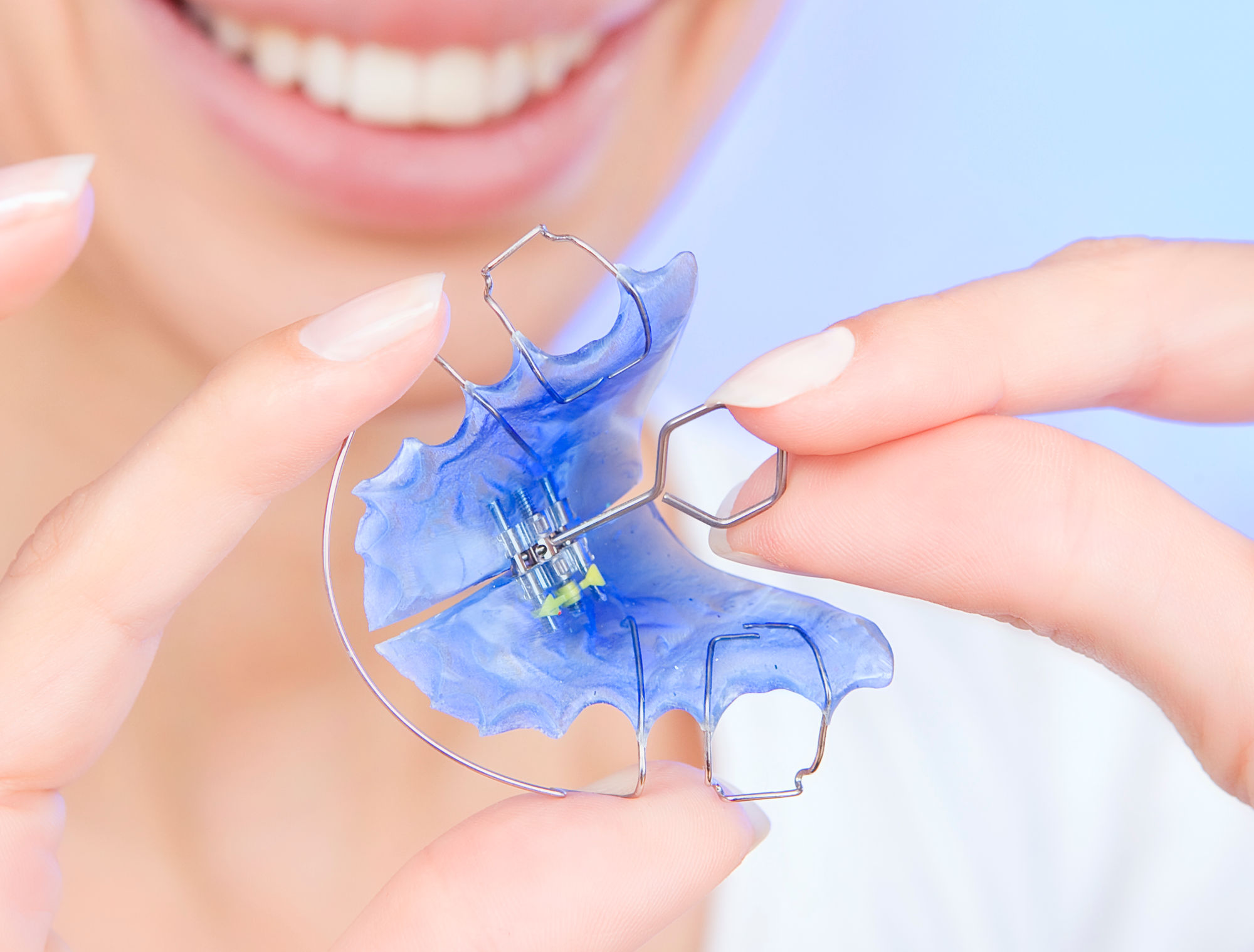
There are two primary categories of removable retainers. Clear thermoplastic retainers, such as Vivera by Invisalign or Essix-style trays, are nearly invisible and fit snugly over the teeth. Hawley retainers, made from acrylic and wire, are more durable and allow minor tooth adjustments. Each type has distinct advantages depending on patient needs.
"In my 20 years of practice, the single most common reason patients need retreatment is failure to wear their retainers consistently at night. I now tell every patient: your retainer is for life, not just for a year."
-- Dr. Sarah Mitchell, DMD, Board-Certified Orthodontist, Atlanta, GA
Night Guards for Bruxism and TMJ Protection
Bruxism, the involuntary grinding or clenching of teeth during sleep, affects an estimated 10 to 15% of adults and has been rising steadily, with stress and screen-related jaw tension cited as contributing factors. A custom-fitted occlusal splint, commonly called a night guard, is the first-line treatment for nocturnal bruxism.
Custom night guards are fabricated from a precise digital scan or impression of your teeth. They distribute biting forces evenly, protect enamel from wear, reduce muscle tension in the jaw, and can help alleviate symptoms of TMJ disorders. While over-the-counter boil-and-bite guards exist, they are significantly less effective and can actually worsen bite problems if improperly fitted.
Warning: Do Not Use a Retainer as a Night Guard
Retainers and night guards serve completely different functions. Using a clear retainer to protect against grinding will destroy the retainer quickly and provide inadequate protection. Conversely, a night guard is not designed to maintain tooth position. If you both grind your teeth and need retention, talk to your dentist about a dual-purpose appliance or wearing both on alternating arches.
Nighttime Aligner Systems: What the Evidence Says
Several companies offer nighttime-only clear aligner systems designed for patients with mild malocclusion. These products use thicker, higher-force plastic to compensate for reduced wear time. Treatment typically takes longer than full-time aligner therapy and is restricted to simple cases involving minor crowding or spacing of less than 4 to 6 millimeters.
A 2025 systematic review published in the American Journal of Orthodontics examined outcomes of nighttime-only aligner therapy across 12 clinical studies. The review found that for carefully selected mild cases, nighttime aligners achieved satisfactory results in approximately 70% of patients, compared to 90 to 95% success rates for full-time wear. However, treatment times averaged 50 to 80% longer, and case refinement rates were significantly higher.
Who Might Be a Candidate for Nighttime Aligners?
Nighttime-only aligner treatment is generally limited to patients with mild crowding (under 4mm), minor spacing issues, or slight relapse after previous orthodontic treatment. Patients with bite problems, moderate to severe crowding, or periodontal issues are not candidates for this approach.
Cost Comparison of Nighttime Dental Appliances
Understanding the financial investment for different nighttime appliances is critical for treatment planning. Prices vary significantly based on geographic location, provider type, and complexity. Below is a current cost comparison for 2026.
| Appliance | Average Cost (2026) | Insurance Coverage | Replacement Frequency |
|---|---|---|---|
| Clear Retainer (per set) | $150 - $400 | Often included in treatment | Every 6-12 months |
| Hawley Retainer | $250 - $600 | Often included in treatment | Every 5-10 years |
| Custom Night Guard (dentist) | $300 - $800 | Partial (dental insurance) | Every 2-5 years |
| OTC Night Guard | $15 - $50 | Not covered | Every 3-6 months |
| Night-Only Aligners (full treatment) | $1,200 - $2,500 | Rarely covered | N/A (treatment course) |
| Full-Time Aligners (comparison) | $3,000 - $7,000 | Partial (orthodontic benefit) | N/A (treatment course) |
While nighttime aligner systems appear less expensive on the surface, patients should factor in the higher refinement rates, longer treatment durations, and the potential cost of corrective treatment if the night-only approach fails to deliver adequate results.
Best Practices for Nighttime Appliance Care
Proper maintenance of your nighttime dental appliance extends its lifespan, prevents bacterial buildup, and ensures optimal performance. Regardless of the type of device you use, following these evidence-based care protocols is essential.
- Clean immediately after removal: Brush your appliance gently with a soft toothbrush and lukewarm water each morning. Avoid hot water, which can warp thermoplastic materials.
- Use appropriate cleaning solutions: Retainer-specific cleaning tablets, diluted white vinegar, or gentle liquid soap are safe options. Never use toothpaste, which is abrasive enough to create micro-scratches that harbor bacteria.
- Store in a ventilated case: Allow your appliance to air dry completely before closing the case. A damp, sealed case creates an ideal environment for bacterial and fungal growth.
- Inspect regularly for wear: Check for cracks, rough edges, loose wires (Hawley retainers), or thinning material. A damaged appliance should be replaced promptly to maintain effectiveness.
- Keep away from pets: Dogs are particularly attracted to the scent of saliva-coated appliances. Chewed retainers are one of the most common reasons for replacement.
Pro Tip: Set a Nightly Reminder
Consistency is everything with nighttime appliances. Use your phone's alarm or a habit-tracking app to build the routine. Placing your appliance case on your nightstand or next to your toothbrush creates a visual cue that significantly improves compliance rates.
When to See Your Orthodontist About Nighttime Appliances
Certain situations require prompt professional evaluation. Schedule an appointment if your retainer no longer fits snugly or causes pain when inserted, if your night guard develops visible cracks or wear-through spots, if you notice your teeth shifting despite consistent appliance wear, if you experience persistent jaw pain, headaches, or earaches upon waking, or if you suspect your appliance is affecting your bite alignment.
Regular dental check-ups, ideally every six months, should include an assessment of any nighttime appliance you wear. Your dentist can identify early signs of wear, fit issues, or changes in your dental alignment before they become significant problems.
"Patients often wait until their retainer completely breaks or their teeth have visibly shifted before seeking help. By that point, they may need a new retainer fabricated for a different tooth position, or even retreatment. Proactive monitoring saves both time and money in the long run."
-- Dr. Amanda Torres, DDS, MS, Clinical Director, Pacific Dental Institute
Sources
- American Association of Orthodontists. Annual Survey of Orthodontic Practice Patterns, 2025.
- Ke Y, Zhu Y, Zhu M. A comparison of treatment effectiveness between clear aligner and fixed appliance therapies. BMC Oral Health, 2019;19(1):78.
- Kravitz ND, Kusnoto B, BeGole E, Obrez A, Then H. How well does Invisalign work? A prospective clinical study evaluating the efficacy of tooth movement with Invisalign. American Journal of Orthodontics and Dentofacial Orthopedics, 2009;135(1):27-35.
- Littlewood SJ, Millett DT, Doubrava B, Bearn DR, Worthington HV. Retention procedures for stabilizing tooth position after treatment with orthodontic braces. Cochrane Database of Systematic Reviews, 2016;(1):CD002283.
- Lobbezoo F, Ahlberg J, Glaros AG, et al. Bruxism defined and graded: an international consensus. Journal of Oral Rehabilitation, 2013;40(1):2-4.
- American Dental Association. Consumer Advisory on Direct-to-Consumer Orthodontics, 2024.
- Rossini G, Parrini S, Castroflorio T, Deregibus A, Debernardi CL. Efficacy of clear aligners in controlling orthodontic tooth movement: a systematic review. Angle Orthodontist, 2015;85(5):881-889.
- US Food and Drug Administration. Dental Devices: Clear Aligners Safety Communication, 2023.
FAQ: Nighttime Dental Appliances
Most orthodontists recommend wearing your retainer for the full duration of sleep, typically 8 to 10 hours per night. In the first 3 to 6 months after braces removal, many practitioners prescribe full-time wear (20-22 hours) before transitioning to nighttime-only. Skipping even a few nights can result in minor tooth shifting, making the retainer feel tight when reinserted. If your retainer causes pain after a brief lapse, contact your orthodontist before forcing it in, as this could damage your teeth or the appliance.
No. Nighttime-only aligners are appropriate only for mild cases such as minor crowding or small gaps. Clinical evidence shows lower predictability (around 70% success vs. 90-95% for full-time wear), longer treatment durations, and higher rates of needing refinement trays. They cannot address bite corrections, rotations of canines or premolars, or crowding greater than approximately 4 to 6 millimeters. Patients with moderate to severe orthodontic needs require full-time aligner wear or traditional braces.
You cannot wear both on the same arch simultaneously, but there are solutions. Some dentists fabricate a combination appliance that serves as both a retainer for the upper teeth and a night guard for grinding. Alternatively, you may wear a retainer on the upper arch and a night guard on the lower arch, or vice versa. If you have a permanent bonded retainer on one arch and grind your teeth, a custom night guard for the opposing arch is typically recommended. Discuss your specific situation with your dentist to find the optimal configuration.
Common signs of nocturnal bruxism include waking up with jaw pain or stiffness, morning headaches (especially in the temples), tooth sensitivity without an obvious cause, visible wear or flattening on tooth surfaces, chipped or cracked teeth, and a sleeping partner reporting grinding sounds. Your dentist can identify telltale patterns of enamel wear during a routine exam. If bruxism is confirmed, a custom night guard is typically recommended as first-line treatment, often alongside stress management and sleep hygiene improvements.
Coverage varies widely by plan. Retainers are often included as part of orthodontic treatment coverage. Custom night guards for bruxism are frequently covered under dental insurance at 50 to 80% after the deductible, though some plans classify them as a medical device under TMJ benefits. Nighttime-only aligner treatments from direct-to-consumer companies are rarely covered by insurance. Always verify coverage with your specific plan before beginning treatment, and ask your dentist's office to submit a pre-authorization to determine your out-of-pocket costs.