
Contents
Vivera Retainers 2026: Complete Guide to Cost, Care & Alternatives
Completing orthodontic treatment -- whether with Invisalign, traditional braces, or any other system -- represents a significant investment of time, money, and discipline. But the moment your aligners or brackets come off is not the finish line. It is the starting point of the retention phase, which orthodontists universally agree is the single most important factor in determining whether your results last a lifetime or gradually unravel. Vivera retainers, manufactured by Align Technology (the company behind Invisalign), are engineered specifically for this purpose using the same advanced digital workflow and proprietary materials. This 2026 guide provides an exhaustive look at how Vivera retainers work, what they cost, how they compare to every alternative, and how to care for them so your investment in a straight smile pays dividends for decades.
Why Retention Is the Most Critical Phase of Orthodontic Treatment
Orthodontic relapse -- the gradual return of teeth toward their pre-treatment positions -- is not a possibility; it is a near certainty without proper retention. Studies published in the American Journal of Orthodontics and Dentofacial Orthopedics show that within five years of treatment completion, up to 50% of patients who do not wear retainers consistently experience clinically significant relapse. Even patients who wore retainers faithfully for two years but then stopped often see measurable shifting within 12 to 24 months of discontinuation.
The biological reason is straightforward. During orthodontic treatment, the teeth are moved through bone by a process of controlled inflammation: bone is resorbed on the pressure side and deposited on the tension side. The periodontal ligament fibers that connect each tooth to its socket are stretched and reorganized during this process. After the active forces are removed, these elastic fibers retain a "memory" of the original tooth position and exert a constant, low-grade pull back toward that position. Full reorganization of the collagen fibers in the periodontal ligament takes at least 12 to 18 months, and in many patients the tendency toward relapse persists for years or even permanently.
"There is no known point in time at which we can confidently say teeth will never move again. Retention should be considered a lifelong commitment, not a temporary inconvenience." -- Dr. Robert Little, University of Washington Long-Term Stability Studies
Warning: Skipping Retention Wastes Your Entire Treatment Investment
The average Invisalign treatment costs $4,000 to $8,000 and takes 12 to 18 months. If you skip retention, you could see visible relapse within months, potentially requiring retreatment that costs just as much as the original treatment. A $400 to $1,000 investment in quality retainers is the cheapest insurance policy you will ever buy for your smile.
What Are Vivera Retainers and How Are They Made?
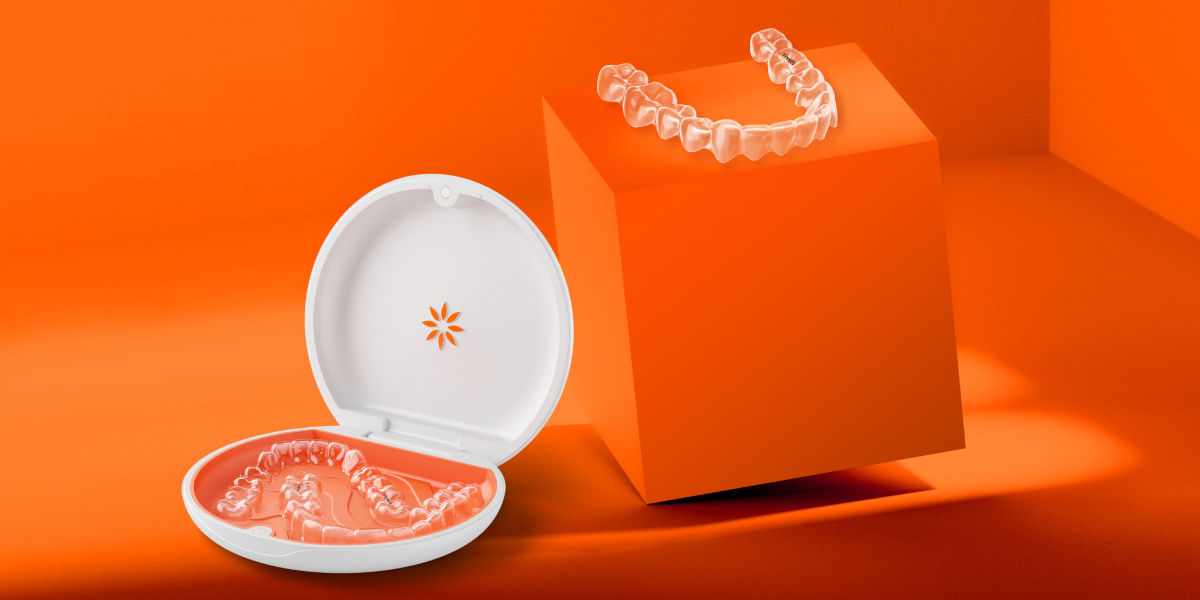
Vivera retainers are clear, removable orthodontic retainers manufactured exclusively by Align Technology. They are fabricated using the same digital workflow as Invisalign aligners but with a critical difference: the material. While Invisalign aligners are made from SmartTrack material optimized for controlled tooth movement, Vivera retainers use a proprietary thermoplastic polyurethane formulation that is specifically engineered for rigidity and long-term shape retention rather than flexibility.
The fabrication process begins with a high-resolution 3D digital scan of your teeth in their final, corrected position -- typically captured with an iTero intraoral scanner. This scan is transmitted to Align Technology's manufacturing facility, where the retainers are precision-thermoformed over 3D-printed models of your dentition. The result is a retainer with sub-millimeter accuracy that fits snugly over every tooth surface.
What Comes in a Vivera Package?
A standard Vivera order includes four sets (previously three sets) of upper and lower retainers as of the 2025-2026 product update. Each set is individually packaged and labeled. You wear one set at a time and move to the next when the current set shows signs of wear, cloudiness, or loses its tight fit. With proper care, this four-set supply is designed to last most patients five to ten years or more.
The Science Behind Orthodontic Relapse
Understanding why teeth relapse helps explain why a rigid, well-fitting retainer is essential. Three distinct biological forces contribute to post-treatment tooth movement.
- Periodontal Ligament Elastic Recoil: The supracrestal fibers (the connective tissue fibers above the bone crest) are the slowest to reorganize after tooth movement. Research shows these fibers can take 232 days or longer to fully remodel, and in some cases, they never completely lose their tendency to pull teeth back toward the original position.
- Ongoing Facial Growth: Even after skeletal maturity, the mandible continues to grow forward and rotate slightly throughout life. This late mandibular growth can cause lower incisors to crowd over time, even in patients who never had orthodontic treatment.
- Soft Tissue Pressure: The lips, cheeks, and tongue exert continuous forces on the teeth. Any imbalance -- such as a tongue thrust habit -- can gradually shift teeth out of alignment if a retainer is not present to counteract these forces.
- Occlusal Forces: Bruxism (teeth grinding) and clenching create abnormal loading patterns that can cause individual teeth to shift, tilt, or extrude over time.
Vivera vs. Other Retainer Types: Head-to-Head Comparison
Choosing the right retainer depends on your lifestyle, oral health, budget, and the complexity of your original orthodontic correction. Here is how Vivera stacks up against the other major options.
| Feature | Vivera | Generic Essix | Hawley | Bonded (Fixed Wire) |
|---|---|---|---|---|
| Material | Proprietary thermoplastic (30% stronger) | Standard PETG or polypropylene | Acrylic + stainless steel wire | Braided stainless steel wire |
| Visibility | Nearly invisible | Nearly invisible | Visible wire across front teeth | Invisible (bonded behind teeth) |
| Removable | Yes | Yes | Yes | No (permanent) |
| Durability | 2-4 years per set | 6-12 months per set | 5-10 years | 5-20+ years (with maintenance) |
| Hygiene Impact | Minimal (removable) | Minimal (removable) | Minimal (removable) | Significant (complicates flossing) |
| Cost (2026) | $400-$1,200 for 4 sets | $100-$300 per set | $250-$600 per set | $250-$500 per arch (placement) |
"Clear retainers like Vivera offer the best combination of patient compliance and effectiveness for most cases. Their near-invisibility removes the social barrier that causes many patients to skip wearing bulkier retainer types." -- Journal of Clinical Orthodontics, 2025
The Vivera Wear Schedule: From Full-Time to Lifetime
Your orthodontist will customize your wear schedule based on the severity of your original malocclusion and how stable your final result appears. However, the following protocol represents the most commonly recommended approach in 2026.
| Phase | Duration | Wear Schedule | Notes |
|---|---|---|---|
| Phase 1: Full-Time | First 3-6 months | 22 hours per day (remove only for eating and brushing) | Critical stabilization period; fibers are most elastic |
| Phase 2: Transitional | Months 6-12 | 12-14 hours per day (evenings and overnight) | Gradual reduction as bone and ligaments stabilize |
| Phase 3: Nightly | Year 1-3 | Every night (8-10 hours during sleep) | Standard maintenance phase |
| Phase 4: Long-Term | Year 3+ (lifetime) | 3-7 nights per week based on stability | Many orthodontists recommend nightly wear indefinitely |
The "Tight Test" for Monitoring Stability
Each time you put your retainer in after a break, pay attention to how it feels. If it slides on easily with no pressure, your teeth are stable. If it feels noticeably tight or you feel pressure on specific teeth, this indicates those teeth have begun to shift and you should increase your wear time back to nightly or even full-time for a period. If the retainer no longer fits at all, contact your orthodontist immediately.
Daily Care and Maintenance Best Practices
Proper care extends the life of each set and prevents bacterial buildup, odor, and discoloration. Follow these guidelines consistently.
- Rinse immediately upon removal: Every time you take your retainers out, rinse them under cool or lukewarm running water. Saliva dries into a film that harbors bacteria if left on the surface.
- Brush gently once daily: Use a soft-bristle toothbrush with a small amount of clear liquid soap (not toothpaste, which is abrasive and causes micro-scratches that trap bacteria and make the retainer cloudy).
- Deep soak weekly: Use Invisalign Cleaning Crystals, a denture cleaner (such as Retainer Brite), or a 50/50 mixture of white vinegar and water for a 15-to-30-minute soak once per week.
- Never use hot water: Water above 120 degrees Fahrenheit (50 degrees Celsius) can permanently warp the thermoplastic material, ruining the fit.
- Always store in the case: When not in your mouth, your retainers should be in their protective case. The number one reason for lost retainers is wrapping them in a napkin during meals.
- Keep away from pets: Dogs are particularly attracted to the scent of saliva-coated retainers and will chew them beyond repair.
Vivera Retainer Cost Breakdown in 2026
The cost of Vivera retainers varies depending on your geographic location, provider, and whether retainers were included in your original Invisalign treatment package. Here are the current ranges.
Standard Vivera package (4 sets upper + lower): $400 to $1,200. The wide range reflects regional pricing differences and provider markup. Practices in major metropolitan areas (New York, Los Angeles, San Francisco) tend to charge at the higher end, while practices in smaller markets typically charge $400 to $700.
Included with Invisalign treatment: Many Invisalign providers include the first set of Vivera retainers (or even the full four-set package) in the total treatment fee. This is increasingly common in 2026 as Align Technology has bundled retainer pricing more aggressively for providers who order them at the time of treatment completion. Always clarify whether retainers are included before you begin Invisalign treatment.
Replacement sets: If you need additional sets beyond your initial four-pack -- due to loss, damage, or simply running out -- you will need a new iTero scan and a new order. This typically costs $300 to $800 for another four-set package, plus the scan fee ($50 to $200) if your provider charges separately for it.
Cost-Saving Tip
Ask your orthodontist about ordering Vivera retainers at the same time as your final Invisalign refinement trays. Because the digital scan is already on file, many providers waive or reduce the scan fee. Some also offer a discount when retainers are ordered simultaneously with treatment completion rather than months later as a separate order.
Insurance Coverage and Smart Payment Strategies
Insurance coverage for retainers depends on whether your plan includes an orthodontic benefit and whether you have already exhausted that benefit during active treatment.
If your dental insurance has an orthodontic benefit (typically a lifetime maximum of $1,500 to $3,000), retainers are generally considered part of orthodontic treatment and may be partially covered -- but only if you have not already used up the lifetime maximum on your braces or aligners. In practice, most patients exhaust their orthodontic benefit during the active phase, leaving retainers as an out-of-pocket expense.
However, there are smart strategies to minimize costs. HSA and FSA accounts are the most powerful tool, as orthodontic retainers qualify as eligible medical expenses under IRS guidelines. Using pre-tax dollars effectively gives you a 25% to 37% discount depending on your marginal tax bracket. Many employers offer FSA Dependent Care accounts that can also be used for children's orthodontic retainers.
Common Mistakes That Damage or Ruin Retainers
Avoid these common errors that shorten retainer lifespan or cause them to fail entirely.
- Using toothpaste to clean them: Regular toothpaste contains abrasive particles that scratch the retainer surface, creating micro-grooves where bacteria accumulate and causing the retainer to become cloudy and odorous.
- Leaving them in hot cars or near heat sources: Thermoplastic warps at relatively low temperatures. A retainer left on a car dashboard on a summer day will be permanently deformed within minutes.
- Wrapping in napkins at restaurants: This is the most common way retainers are accidentally thrown away. Always bring your case to meals.
- Removing them by pulling from one side: This creates asymmetric stress that can crack the retainer. Instead, use both hands to lift evenly from the back molars on both sides simultaneously.
- Skipping wear because "they feel fine": Teeth can shift microscopically before you notice any change in retainer fit. By the time the retainer feels tight, relapse has already begun.
Sources
- American Journal of Orthodontics and Dentofacial Orthopedics -- Long-Term Stability and Relapse After Orthodontic Treatment, 2024
- Align Technology -- Vivera Retainer Technical Specifications and Clinical Data, 2025
- Journal of Clinical Orthodontics -- Clear Retainer Compliance and Patient Satisfaction: A Multicenter Study, 2025
- University of Washington Department of Orthodontics -- Dr. Robert Little Long-Term Stability Research Archive
- American Association of Orthodontists -- Retention and Relapse: Clinical Practice Guidelines, 2025 Update
FAQ: Vivera Retainers
This is not recommended as a long-term solution. Invisalign aligner trays are made from SmartTrack material, which is engineered for flexibility and controlled tooth movement -- not for long-term shape retention. Aligner trays wear out faster, lose their rigidity sooner, and are less effective at preventing relapse compared to Vivera's retention-specific material. Using your last tray as a temporary bridge for a few days while waiting for your Vivera retainers is acceptable, but it should not be your permanent solution.
With nightly-only wear and proper care, each individual set of Vivera retainers typically lasts 2 to 4 years. Patients who grind their teeth (bruxism) may wear through sets faster -- sometimes in 12 to 18 months. The four-set package is designed to provide 5 to 10+ years of retainer coverage for most patients. Signs that it is time to move to your next set include visible cracks, permanent cloudiness that does not clean away, loss of snug fit, or noticeable flexibility when you press on the retainer.
Yes. Vivera retainers can be ordered for any patient, regardless of how their teeth were straightened. Your orthodontist or dentist simply needs access to an iTero scanner to capture a 3D digital impression of your aligned teeth. The scan is submitted to Align Technology, and your custom Vivera retainers are fabricated and shipped to the office. The process is identical whether your teeth were moved with Invisalign, traditional brackets, lingual braces, or any other orthodontic system.
If the retainer still fits but feels tighter than usual, this indicates minor tooth movement has occurred. Put the retainer back in and resume full-time wear (22 hours per day) for at least one to two weeks to guide the teeth back. If the retainer does not seat fully over all teeth or causes pain when you attempt to insert it, do not force it -- this risks cracking the retainer or damaging your teeth. Contact your orthodontist for an evaluation. You may need a new scan for replacement retainers or, in cases of significant relapse, a short course of refinement aligners.
The consensus among orthodontists in 2026 is yes -- for adults, retainer wear should be considered a lifetime commitment. While you can eventually reduce to wearing your retainer just a few nights per week, stopping entirely carries a real risk of gradual relapse due to ongoing biological changes in the jaw, soft tissue pressures, and normal aging processes. For adolescent patients, the guidance is similar: nightly wear through the teenage years and into adulthood, then a gradual reduction but never complete discontinuation. Think of it the same way you think about brushing your teeth -- it is simply part of your routine.