
Contents
Grillz, Tooth Gems, and Dental Jewelry in 2026: Safety, Risks, and Expert Advice
Dental jewelry has evolved far beyond a niche subculture. In 2026, tooth gems, custom grillz, and other forms of oral adornment are firmly embedded in mainstream fashion. Celebrities, athletes, and social media influencers continue to fuel a market that industry analysts now value at over $4 billion globally. Yet behind the sparkle lies a growing body of clinical evidence about the risks these accessories pose to teeth, gums, and overall oral health. This comprehensive guide examines every major category of dental jewelry, compares their safety profiles, and provides expert-backed guidance so you can make an informed decision before adorning your smile.
Why Dental Jewelry Is Surging in 2026
Several converging factors have accelerated the dental jewelry trend. The rise of short-form video platforms has created a visual culture where a glinting tooth gem instantly draws attention. Advances in dental adhesive technology have made professional application faster and more accessible. Meanwhile, the luxury fashion industry has embraced grillz as statement pieces, with high-end jewelers offering custom designs that retail for tens of thousands of dollars. According to a 2025 market analysis by Grand View Research, the dental cosmetics segment grew by 18% year-over-year, with tooth gems and grillz accounting for a substantial share of that growth.
Cultural acceptance has also played a role. What was once associated almost exclusively with hip-hop culture has broadened to encompass pop, country, and K-pop fandoms. Red-carpet appearances featuring tooth gems from artists across every genre have normalized the look, while professional athletes in the NFL, NBA, and Premier League regularly showcase elaborate grillz in post-game interviews.
Tooth Gems: Materials, Application, and Longevity
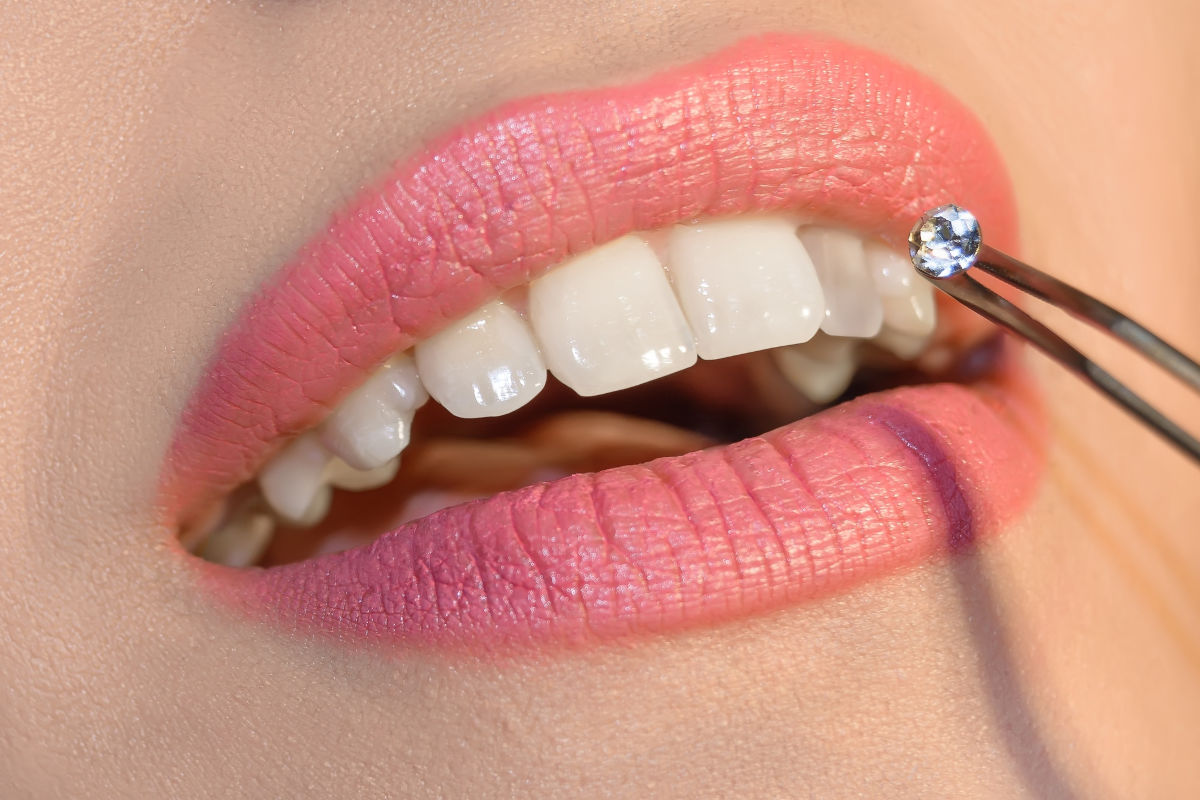
Tooth gems remain the most popular and least invasive form of dental jewelry. These small crystals, rhinestones, or precious metal charms are bonded to the labial surface of a tooth using a composite resin adhesive, similar to the material used for orthodontic brackets. When applied by a licensed dental professional, the procedure takes approximately 15 to 30 minutes and requires no drilling or permanent alteration of the tooth structure.
Types of Tooth Gems Available in 2026
- Swarovski crystals: The most affordable option, available in dozens of colors and sizes, typically lasting 6 to 12 months.
- Genuine diamonds: Small brilliant-cut diamonds set in gold or platinum bezels, lasting 1 to 2 years with proper care.
- Gold and platinum charms: Pre-formed shapes such as stars, hearts, initials, or custom designs crafted from 18k or 24k gold.
- Lab-grown gemstones: An eco-conscious alternative that has gained popularity in 2025-2026, offering the same visual impact at a lower environmental cost.
Dr. Sarah Chen, DDS, Cosmetic Dentist at Beverly Hills Dental Studio: "When tooth gems are applied correctly using dental-grade composite and cured with proper light activation, the enamel remains completely intact. The problem arises when people turn to unlicensed technicians or DIY kits that use industrial adhesives not designed for oral use. I have seen cases of chemical burns, allergic reactions, and irreversible enamel damage from non-professional applications."
Professional removal is equally straightforward. A dentist uses a specialized instrument to gently debond the gem, then polishes away any remaining adhesive. The tooth surface returns to its original condition. However, attempting to remove a gem at home with pliers, nail files, or other improvised tools frequently results in chipped enamel, cracked teeth, or soft tissue injuries.
Grillz: From Hip-Hop Culture to Mainstream Fashion
Grillz are removable decorative covers, typically made of gold, silver, platinum, or base metals, that snap over one or more teeth. They originated in the hip-hop community in the 1980s and have since become a mainstream fashion accessory. In 2026, the grillz market spans everything from budget-friendly plated options under $50 to bespoke diamond-encrusted pieces exceeding $100,000.
How Custom Grillz Are Made
High-quality custom grillz require a dental impression or digital scan of the teeth. A jeweler or dental technician then creates a wax model, casts it in the chosen metal, and finishes the piece with stones or engravings as requested. The fit should be snug but not excessively tight, allowing removal without force. Poorly fitting grillz are the primary source of the dental problems associated with this type of jewelry.
Even removable grillz carry significant risk. The metal traps food particles and plaque against the tooth surface, creating an anaerobic environment ideal for bacterial growth. Wearing grillz for extended periods, especially during eating or sleeping, dramatically increases the risk of cavities, gum inflammation, and halitosis. Base-metal grillz may also contain nickel or cadmium, which can trigger allergic reactions or release toxins into the oral cavity.
Tooth Tattoos and Twinkles: Niche Options Explained
Beyond gems and grillz, two additional forms of dental ornamentation have maintained a following. Tooth tattoos come in two distinct varieties. Temporary tattooths are thin decals or stickers applied to the tooth surface using dental-safe adhesive. They typically last one to four weeks and are completely reversible. Crown tattoos, on the other hand, involve embedding a custom image into a dental crown during the manufacturing process. This is only done when a crown is already clinically indicated, and the design becomes a permanent feature of the restoration.
Twinkles occupy a space between simple gems and elaborate grillz. These are pre-shaped gold or white-gold ornaments, often incorporating a small diamond, in designs such as stars, dolphins, hearts, or moons. They are larger than standard tooth gems and project slightly more from the tooth surface, which can cause irritation to the inner lip or cheek tissue if improperly positioned.
Dr. Marcus Williams, Periodontist and Clinical Researcher, Columbia University: "Any foreign object attached to a tooth creates a new ecosystem for bacterial colonization. In my clinical experience, patients with tooth gems or twinkles who maintain excellent oral hygiene rarely develop complications. The danger is complacency. Once the novelty fades, patients often neglect the extra brushing and flossing required, and that is when we start seeing plaque accumulation, decalcification, and early-stage gingivitis around the adornment."
Dental Jewelry Comparison: Risks, Costs, and Durability
The following tables provide a side-by-side comparison of the major dental jewelry types to help you evaluate your options based on clinical risk, cost, and practical considerations.
| Feature | Tooth Gems | Grillz (Removable) | Twinkles | Tooth Tattoos |
|---|---|---|---|---|
| Cost Range | $50 - $500 | $50 - $100,000+ | $100 - $400 | $20 - $200 |
| Durability | 6 - 24 months | Years (metal) | 6 - 18 months | 2 - 4 weeks (temp) / permanent (crown) |
| Reversibility | Fully reversible | Fully reversible | Fully reversible | Reversible (temp) / Irreversible (crown) |
| Enamel Damage Risk | Low (professional) | Medium-High | Low (professional) | None (temp) / N/A (crown) |
| Professional Required | Strongly recommended | Custom fitting recommended | Yes | No (temp) / Yes (crown) |
| Oral Health Risk | Tooth Gems | Grillz | Twinkles | Tooth Tattoos |
|---|---|---|---|---|
| Plaque Accumulation | Moderate | High | Moderate-High | Low-Moderate |
| Gum Irritation | Low | High | Moderate | Low |
| Tooth Wear/Fracture | Minimal | Moderate-High | Low | None |
| Allergic Reaction Risk | Rare | Moderate (base metals) | Rare | Low |
| Cavity Risk Increase | Slight | Significant | Moderate | Slight |
Health Risks Dentists Want You to Know About
Beyond the specific risks associated with each type of dental jewelry, several overarching health concerns apply across all categories. Understanding these risks is essential before committing to any form of tooth adornment.
Bacterial Colonization and Biofilm Formation
Every dental ornament creates new surface geometry where bacterial biofilm can form. A 2024 study published in the International Journal of Dental Hygiene used scanning electron microscopy to examine tooth gems after removal and found dense bacterial colonies on and around the adhesive margins in 72% of samples, even among patients who reported diligent brushing. The study concluded that standard brushing techniques are often insufficient to fully clean around bonded ornaments, recommending the use of interdental brushes or water flossers to supplement daily hygiene.
Soft Tissue Irritation and Ulceration
Dental jewelry that protrudes from the tooth surface can cause chronic irritation to the lips, cheeks, and tongue. Repeated friction against soft tissue may result in aphthous ulcers, mucosal thickening, or fibrotic changes. Grillz are the most common offenders due to their bulk and metallic edges, but even small tooth gems can irritate the inner lip if positioned on the upper central incisors.
Impact on Dental Imaging and Diagnosis
Metal-based dental jewelry, particularly grillz and gold twinkles, can create artifacts on dental X-rays that obscure underlying pathology. Dentists may struggle to detect early-stage cavities, periapical infections, or bone loss beneath metallic ornaments. This diagnostic interference can delay treatment and allow conditions to progress to more severe stages before detection.
Safe Practices: How to Protect Your Smile
If you decide that dental jewelry is right for you, following these evidence-based guidelines will minimize risk and help preserve your oral health.
- Brush at least twice daily with a soft-bristled toothbrush, paying extra attention to the area surrounding the ornament.
- Use a water flosser or interdental brush daily to clean the adhesive margins where a toothbrush cannot reach.
- Rinse with an alcohol-free antimicrobial mouthwash after meals.
- Remove grillz before eating, drinking anything other than water, or sleeping.
- Clean removable grillz daily with a non-abrasive jewelry cleaner and a soft brush.
- Schedule dental check-ups every four to six months rather than the standard six to twelve months.
- Avoid using whitening products directly on or near bonded gems, as they can weaken the adhesive.
Professional vs DIY Application: A Critical Choice
The single most important factor determining whether dental jewelry will harm your teeth is who applies it. The explosion of DIY tooth gem kits on e-commerce platforms has contributed to a sharp increase in dental injuries. A 2025 report from the British Dental Association documented a 340% increase in emergency dental visits related to home-applied tooth gems and grillz between 2022 and 2025.
Dr. Elena Vasquez, DDS, President of the International Academy of Dental Aesthetics: "DIY kits are the single biggest threat to dental health in the cosmetic jewelry space. They typically include industrial-grade cyanoacrylate glue, which is not biocompatible and can cause chemical burns to the gingiva. I have treated patients who permanently scarred their gum tissue and damaged their enamel trying to apply gems at home. The $30 you save on a kit can easily turn into $3,000 in restorative dental work."
Professional application ensures that the tooth surface is properly prepared with phosphoric acid etching and bonding agent before the composite resin is applied, creating a strong yet reversible bond. Dental professionals also assess whether the tooth is a suitable candidate, avoiding teeth with existing restorations, weakened enamel, or active decay. They can also advise on optimal placement to minimize soft tissue irritation and bite interference.
Sources
- American Dental Association. "Oral Health Topics: Dental Jewelry and Grillz." Updated 2025.
- Grand View Research. "Global Dental Cosmetics Market Size and Trends Report, 2025-2030." 2025.
- American Academy of Cosmetic Dentistry. "Consumer Survey on Dental Aesthetics Trends." 2025.
- International Journal of Dental Hygiene. "Bacterial Colonization Patterns Around Bonded Dental Ornaments: A Scanning Electron Microscopy Study." Vol. 22, Issue 3, 2024.
- British Dental Association. "Emergency Presentations Related to DIY Dental Cosmetics: A Five-Year Retrospective Analysis." 2025.
- Journal of Prosthetic Dentistry. "Periodontal Complications of Permanently Cemented Grillz: A Case Series." Vol. 133, Issue 2, 2025.
- Journal of the American Dental Association. "Radiographic Artifacts From Metallic Dental Ornaments and Their Impact on Diagnosis." Vol. 156, Issue 1, 2025.
FAQ: Dental Jewelry Questions Answered
When applied and removed by a licensed dental professional using dental-grade composite resin, tooth gems do not cause permanent enamel damage. The bonding process is virtually identical to attaching an orthodontic bracket. However, DIY application with industrial adhesives, or forceful home removal, can chip, crack, or chemically damage the enamel irreversibly. Always have a professional handle both application and removal.
Dentists recommend limiting grillz wear to short periods for aesthetic occasions only. There is no officially sanctioned "safe" duration, but most dental professionals advise against wearing them for more than a few hours at a time. You should never eat, drink anything other than water, or sleep while wearing grillz. After each use, clean both the grillz and your teeth thoroughly before putting them away.
Most dental professionals advise against any form of dental jewelry for individuals under 18. Adolescent enamel is still maturing and is more susceptible to damage from adhesives and bacterial accumulation. Additionally, teenagers with braces or other orthodontic appliances should not have dental jewelry applied, as it can interfere with treatment and complicate oral hygiene. If a teenager insists, temporary stick-on tattooths represent the lowest-risk option available.
Removable grillz must always be taken out before an MRI, as metallic objects in the magnetic field can cause serious injury and image distortion. Non-metallic tooth gems, such as crystal or rhinestone varieties, are generally MRI-safe but should still be disclosed to the radiologist. Metallic gems and twinkles may create artifacts on dental X-rays that obscure underlying tooth structure, potentially delaying diagnosis of cavities or infections. Always inform your dentist and any medical imaging team about all dental jewelry you have.
If a tooth gem detaches, do not attempt to reattach it yourself. There may be residual adhesive on the tooth that needs professional removal and polishing. Swallowing a small gem is generally harmless, as it will pass naturally, but if you experience choking or difficulty breathing, seek immediate medical attention. Contact your dentist to schedule a re-application if desired, and avoid using superglue or other household adhesives as a temporary fix.